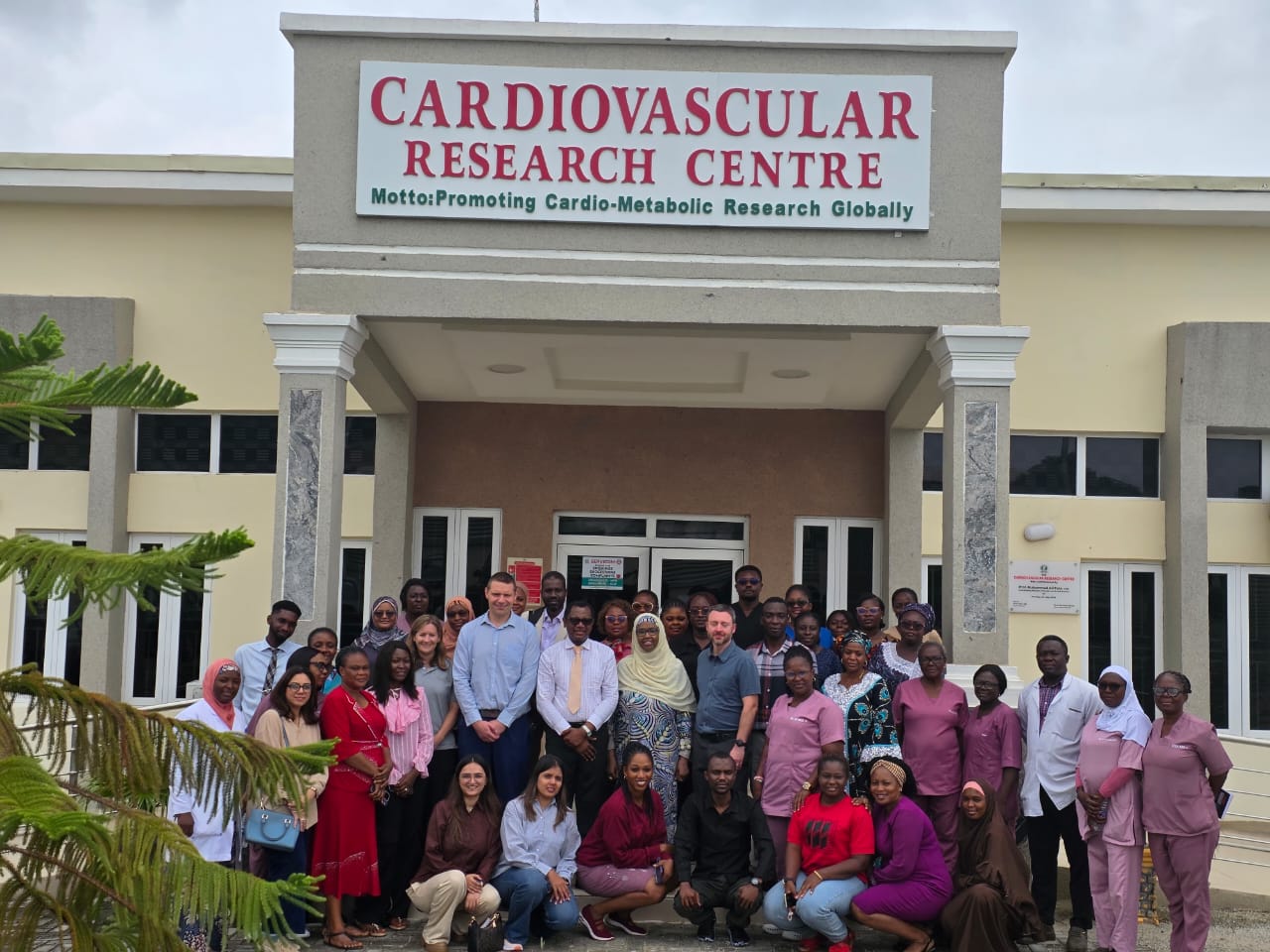

ACEPHAP, TAconnect conduct Four-Day Qualitative Formative Study Training for EMBRACE Project in Gombe State
African Centre of Excellence for Population Health and Policy (ACEPHAP), in partnership with Technical Advice Connect (TAconnect), has conducted a four-day training on the Qualitative Formative Study for the Enhancing Maternal and Baby Resilience through Access, Care and Equity (EMBRACE) Project from the 22nd to 25th August, 2026 in Gombe State.
The training, held at the EMBRACE Office in Gombe, was designed to prepare members of the study team with the knowledge, practical skills and ethical understanding required to conduct high-quality qualitative data collection for the formative assessment of maternal and newborn health services in the state.
The EMBRACE Project is a partnership between ACEPHAP and TAconnect aimed at strengthening understanding of maternal and newborn health service access and experiences. The formative study is expected to generate evidence on the barriers, gaps and facilitators influencing access to maternal and newborn health services.
The training covered the study overview, methodology, conceptual framework, ethical considerations, data collection tools, qualitative interviewing and Focus Group Discussion (FGD) facilitation techniques. Participants were introduced to the Levesque Framework, including its dimensions of accessibility and corresponding abilities, and engaged in practical group exercises to strengthen their understanding.
A major component of the training was a detailed review of the Key Informant Interview (KII), In-Depth Interview (IDI) and FGD guides. Participants examined question flow, probing techniques, adaptation of language for different respondent groups, Hausa translation considerations, and probes for identifying gaps, barriers and facilitators.
Participants also received training on ethical principles, informed consent, confidentiality and anonymity. The sessions further covered field logistics, safety protocols, participant scheduling, communication, team responsibilities and daily field debriefing procedures.
The training placed strong emphasis on practical learning. Participants conducted KII, IDI and FGD role-plays, rotating between interviewer, respondent and observer roles, with feedback provided by peers and facilitators. A full interview simulation was also conducted to assess participants' readiness for fieldwork.
One of the four days was dedicated to the pilot study, during which field teams were dispatched to test the data collection tools and procedures in a real-world setting. The pilot study took place on 25 August 2026, with team dispatch at 9:00 AM, followed by a fieldwork debriefing and review session from 2:00 PM to 4:00 PM.
The debriefing provided an opportunity for participants to share their field experiences, identify challenges encountered during the pilot and discuss necessary adjustments to the data collection tools and procedures before the commencement of the main study.
The training represents an important step in strengthening the capacity of the EMBRACE study team to collect quality qualitative evidence on maternal and newborn health service access and experiences in Gombe State. The evidence generated through the study is expected to support a deeper understanding of existing challenges and opportunities for improving maternal and newborn health services.
You can join the conversation on:
- Instagram: @acephap_buk
- LinkedIn: @acephap
- Facebook: @acephap
- X/Twitter: @acephap_buk